In my previous article, I introduced the main wine-growing regions of Bordeaux and explained the basic principles behind the appellation system (in April 2025). Today, let’s take a closer look at the Libournais region, and more particularly at Saint-Émilion and its neighbouring appellations.
Saint-Émilion: an appellation steeped in history
The Saint-Émilion Protected Designation of Origin (AOC) was officially recognised by decree on 14 November 1936. This was right at the beginning of the French appellation system: the INAO, the national body responsible for overseeing appellations, had only been established in 1935.
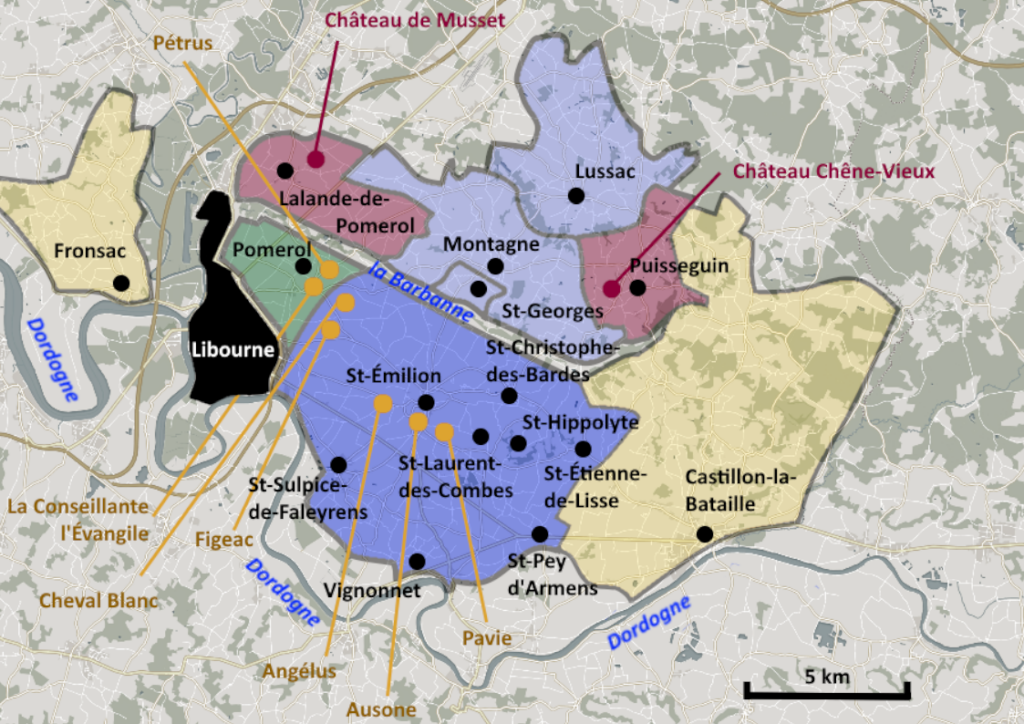
The appellation covers the vineyards of the medieval town of Saint-Émilion and seven surrounding municipalities: Saint-Christophe-des-Bardes, Saint-Étienne-de-Lisse, Saint-Hippolyte, Saint-Laurent-des-Combes, Saint-Pey-d’Armens, Saint-Sulpice-de-Faleyrens and Vignonet. These eight municipalities had, in fact, already joined forces to form the first winegrowers’ association as soon as this became legally possible, back in 1884.
Saint-Émilion has, however, one particular feature when it comes to appellations: there are actually two distinct appellations covering the very same geographical area: Saint-Émilion and Saint-Émilion Grand Cru.
The specifications are stricter for the latter, requiring, in particular, a minimum ageing period of two years. Wines bearing the Saint-Émilion appellation, on the other hand, can be released onto the market as early as the spring following the harvest.
The Saint-Émilion Grand Cru appellation does not, by any means, imply that the wine comes from a classified estate. And, contrary to what one might expect, it actually accounts for by far the largest production volumes.
The Saint-Émilion classification
The various levels of estate classification are found exclusively within the Saint-Émilion Grand Cru appellation.
There are three categories: Grands Crus Classés (71 estates in 2022), Premiers Grands Crus Classés B (12 estates), and finally Premiers Grands Crus Classés A (2 estates: Château Pavie and Château Figeac), which represent the very top of the hierarchy.
The Saint-Émilion classification has one distinctive feature: it dates back to 1955 and is one of the very few in France that is, in principle, reviewed every ten years.
It is therefore designed to evolve over time, taking into account the quality of the wines, their consistency from one vintage to another, their ageing potential, as well as other criteria relating in particular to the reputation and promotion of the estates.
Interestingly, three estates chose not to enter the most recent classification and consequently lost their status as Premier Grand Cru Classé A: Châteaux Cheval Blanc, Ausone and Angélus.
The satellite appellations of Saint-Émilion
Surrounding Saint-Émilion, four appellations have been granted the right to combine the name of this famous town with that of their own municipality: Puisseguin Saint-Émilion, Montagne Saint-Émilion, Saint-Georges Saint-Émilion and Lussac Saint-Émilion.
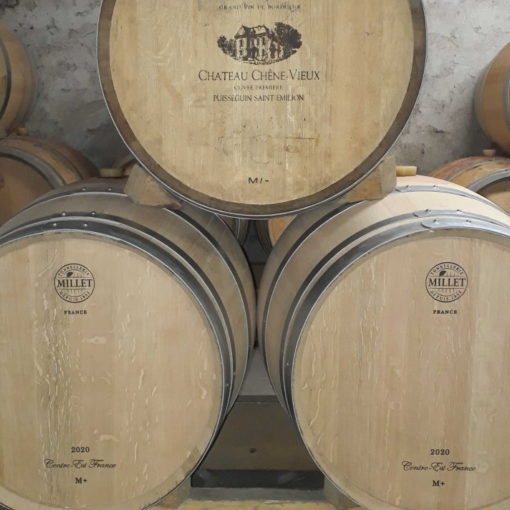
Among these, Puisseguin Saint-Émilion holds a very special place for us, as this is where Château Chêne-Vieux is located.
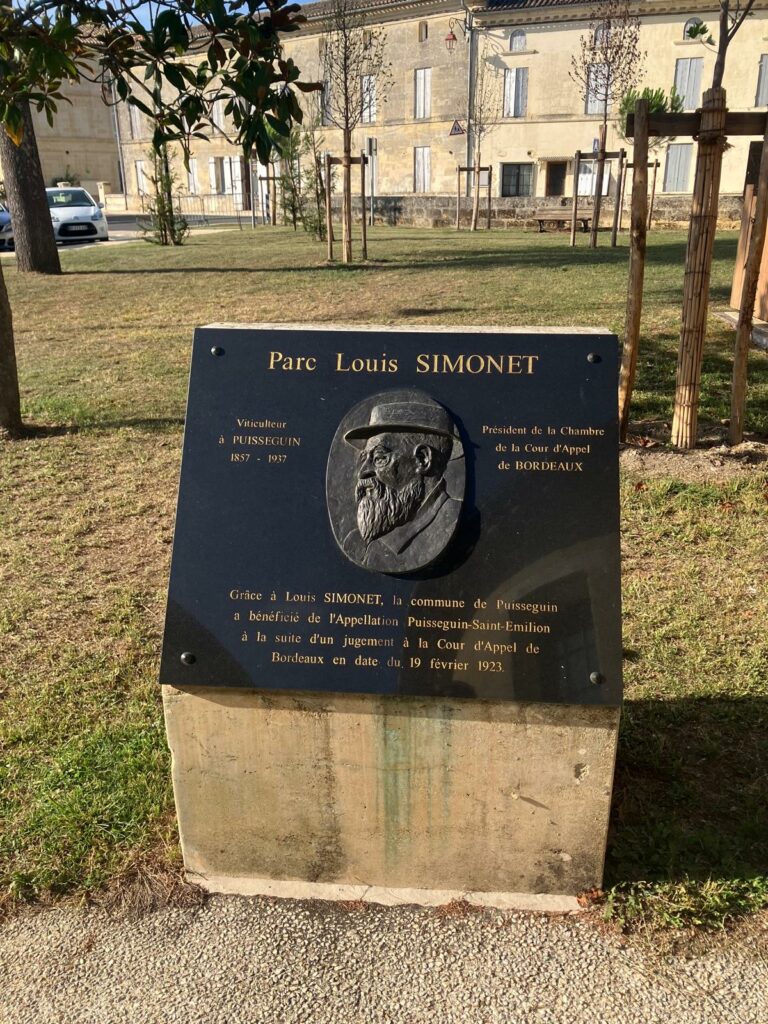
The history of this appellation is quite fascinating. In the early 20th century, winegrowers in Puisseguin wanted to benefit from the reputation of Saint-Émilion, with which they shared some of the same terroirs and winemaking traditions. However, Puisseguin was not part of the former jurisdiction of Saint-Émilion and therefore could not simply use its name.
Following several attempts and a legal battle, a ruling by the Bordeaux Court of Appeal on 19 February 1923 finally granted Puisseguin wines the right to add the name Saint-Émilion to that of their own municipality. The Puisseguin Saint-Émilion appellation was officially established in 1936.
Among those who played a major role in securing this recognition was Louis Simonet, who was mayor of Puisseguin at the time. His story is closely intertwined with that of Château Chêne-Vieux!
The house at Chêne-Vieux was indeed built in 1902 by Louis Simonnet. Following his wife’s death, he retained the usufruct of the property until it was sold by his heirs to Camille Camallonga in 1937. He purchased it for his daughter Yvonne, who had not yet taken the Foucard name at the time.
The park in the heart of the village now bears his name.
Since then, winegrowers from the Puisseguin Saint-Émilion and Lussac Saint-Émilion appellations have also joined the Saint-Émilion winegrowers’ association.
Pomerol and Lalande-de-Pomerol: two neighbouring appellations
To the west lies another particularly renowned part of the Libournais: the Pomerol and Lalande-de-Pomerol appellations, both of which were also established in 1936.
The Pomerol appellation covers a relatively small area but produces some of the most sought-after wines in the world. It is difficult to talk about Pomerol without mentioning Pétrus, whose reputation is truly international, as well as La Conseillante and L’Évangile, to name just a few of the appellation’s most prestigious estates.
Lalande-de-Pomerol lies just across the Barbanne, a small stream that nevertheless plays an important role in shaping the terroir and defining the boundaries of the appellations around Saint-Émilion.
The other appellations of the Libournais
The remaining appellations are located a little further away from the village of Saint-Émilion. These include Fronsac and Canon-Fronsac to the west, and Castillon-Côtes de Bordeaux and Francs Côtes de Bordeaux to the east.
Here again, we find a region steeped in history. It was in Castillon, in 1453, that the famous battle took place in which the English general Talbot was defeated by the French army, bringing the Hundred Years’ War to an end.
Behind the name Bordeaux, therefore, lies a remarkable diversity of terroirs, histories and appellations. And that is undoubtedly what makes our wine region so rich and distinctive.
Beyond its wines, landscapes and charming picturesque villages, the region has also been a privileged witness to some major historical events: the Hundred Years’ War, the birth of winegrowers’ associations, the creation of the first appellations, and even Louis Pasteur’s work on wine in connection with the 1855 Universal Exhibition, to name just a few.
This rich heritage is probably another reason why the region attracts so many visitors every year.